
As caregivers, we naturally focus on protecting our clients—but remember to protect yourself as well.
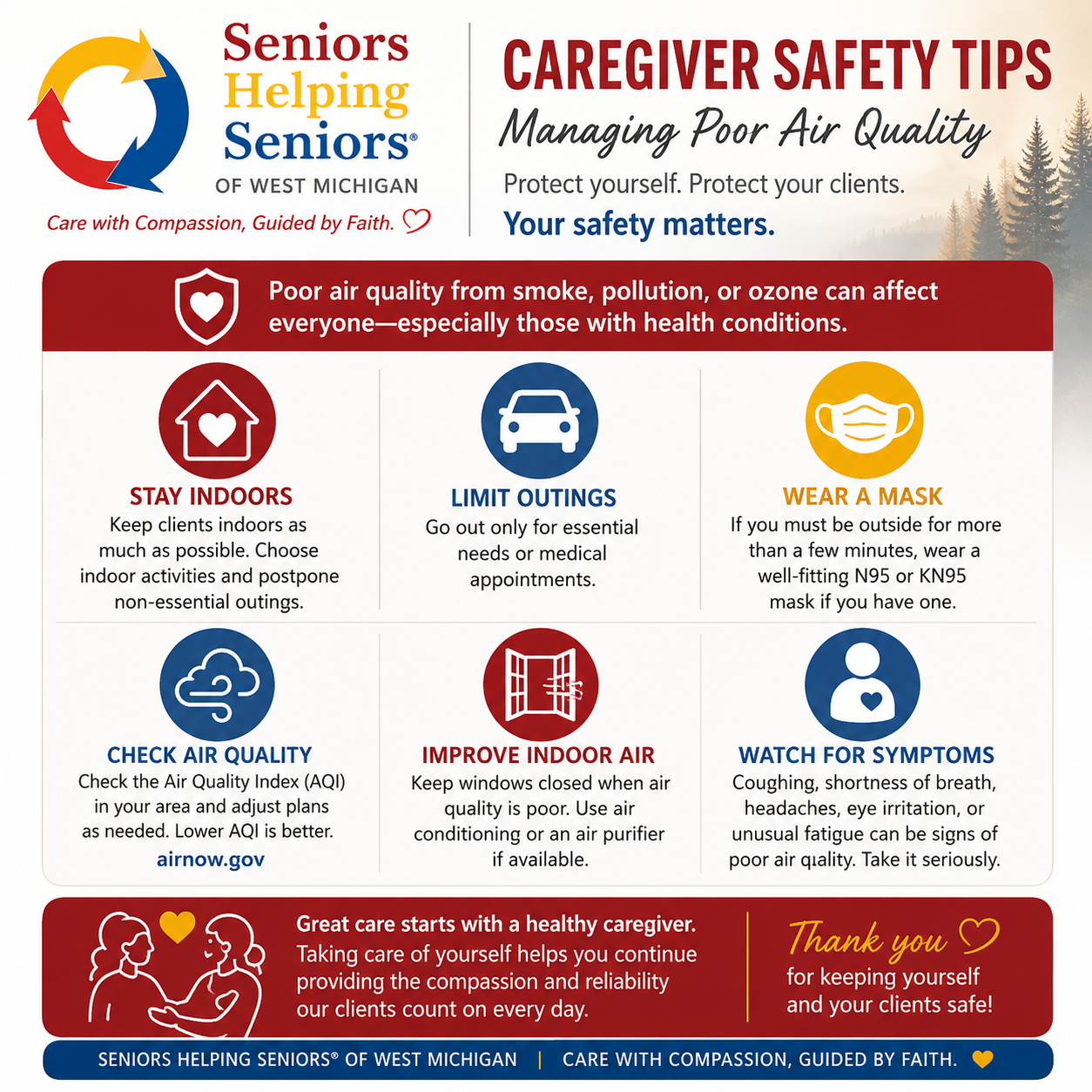
When air quality is poor due to wildfire smoke, ozone, or other pollutants, try to keep outdoor activities to a minimum. If your client has respiratory or heart conditions, consider postponing non-essential outings and enjoying activities indoors instead. Open windows only when air quality improves, and use air conditioning or air filtration if available.
If you must be outdoors, keep trips as brief as possible. A well-fitting N95 or KN95 mask can help reduce exposure to harmful smoke particles. Pay attention to symptoms such as coughing, shortness of breath, burning eyes, headaches, or unusual fatigue in both yourself and your client.
If a client has an essential medical appointment, follow their care plan and use the safest route to and from the vehicle. If you have concerns about taking a client out during poor air quality, contact the office for guidance.
Providing excellent care also means caring for your own health. By taking simple precautions, you help ensure you can continue serving your clients safely and reliably.